


Many individuals will let you know that to be wholesome, you need to cancel sure meals.
The offending edibles: These brightly-packaged, cartoon-endorsed, highly-refined, ultra-delicious meals typically present in heart aisles of the grocery retailer.
In accordance with standard opinion, these “junk meals” include a lot of energy, however hardly any of the stuff the human physique wants for good well being.
And but:
This isn’t a “don’t eat these horrible meals” story.
That’s as a result of…
- Scrumptious meals serves a goal, even when it comprises little to no dietary worth.
- Low-quality meals can truly be good for you.
- 100% abstinence isn’t needed (and normally backfires).
These statements might sound controversial. That’s why we’re going to again them up—utilizing what we’ve discovered from teaching over 100,000 shoppers, and a few enjoyable charts.
Plus, we’ll reveal a 5-step course of that may assist you to savor the meals you’re keen on, with out guilt—and with out harming your well being.
First, a disclaimer.
We don’t just like the phrase “junk meals.”
Junk meals isn’t rubbish.
As you’ll see under, meals can provide near-zero dietary worth and nonetheless enhance some elements of general well being.
Plus, referring to meals as “junk” creates a “good meals” vs. “unhealthy meals” dichotomy that does extra hurt than good. (Learn extra: We’ve Told 100,00 Clients That There Are No Bad Foods)
We use the phrase “junk meals” just because that’s how folks speak in actual life.
Our use of this phrase doesn’t imply we expect these meals are unhealthy, incorrect, or nugatory. They’re something however.
Let’s discover out why.
Three good causes to embrace junk meals
Though there are exceptions on the market—the individuals who truly want carrots sticks to BBQ chips—the overwhelming majority of us delight within the ultra-flavorful, typically neon-colored world of processed meals.
This text isn’t for the carrot-eaters. (Y’all are doing superior. You’re freaks, however you’re superior—and don’t want to alter a factor.)
This text is for almost all, who love these meals but additionally typically expertise an inner battle round them: On the one hand, they style SO good; however, you don’t need to break your well being.
Our pitch: In case you love junk meals, you CAN embody it in your eating regimen, with out feeling responsible or worrying that it’ll break your well being.
We’ve received three the explanation why.
Over 150,000 health & fitness professionals certified
Save up to 30% on the industry’s top nutrition education program
Get a deeper understanding of nutrition, the authority to coach it, and the ability to turn that knowledge into a thriving coaching practice.

Motive #1: You’ll seemingly eat junk meals anyway.
In case you’ve ever stated, “That’s it. I’m by no means consuming these items once more!” you most likely assumed your future would look one thing just like the Zero-Junk Fantasy.
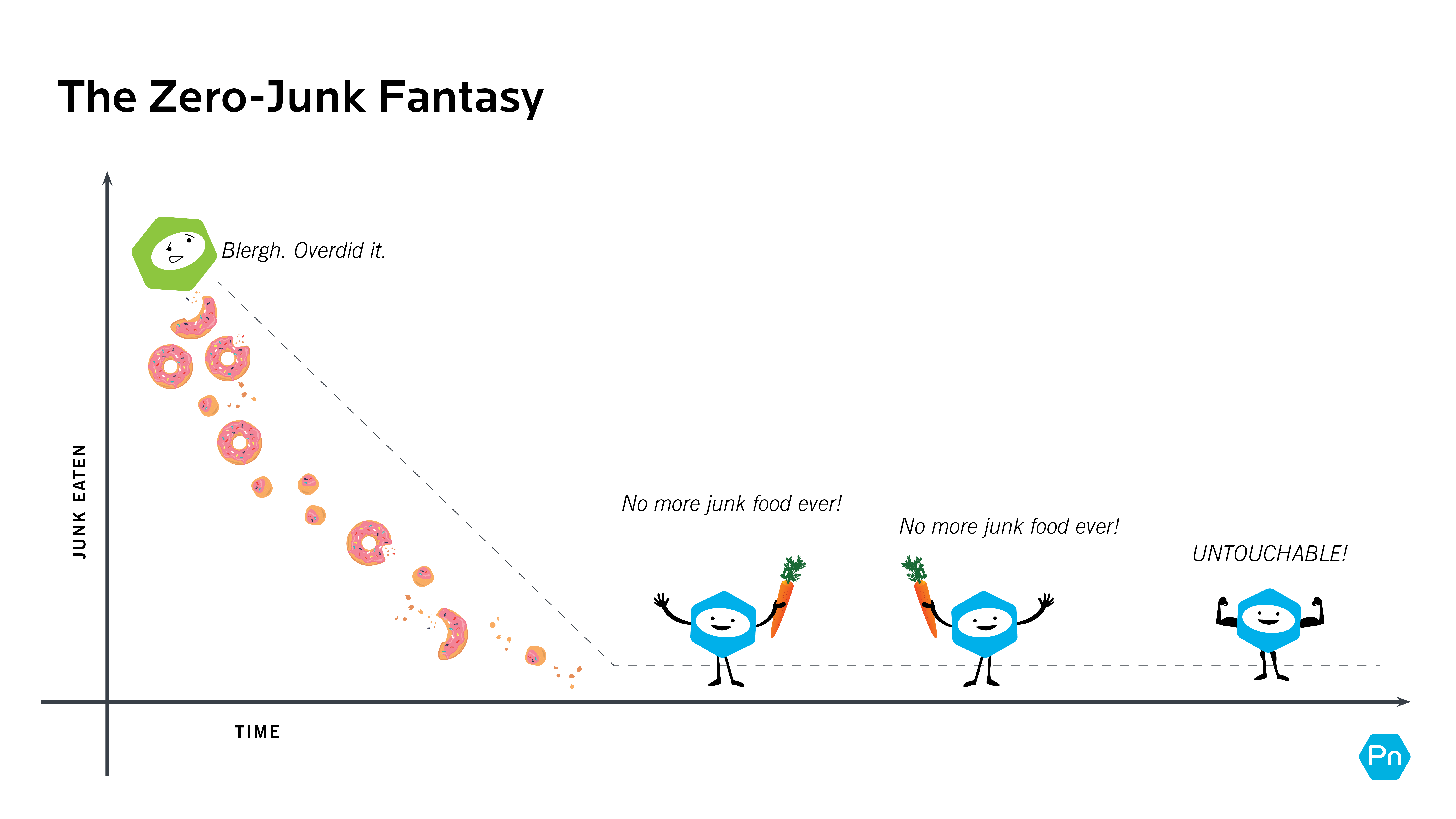
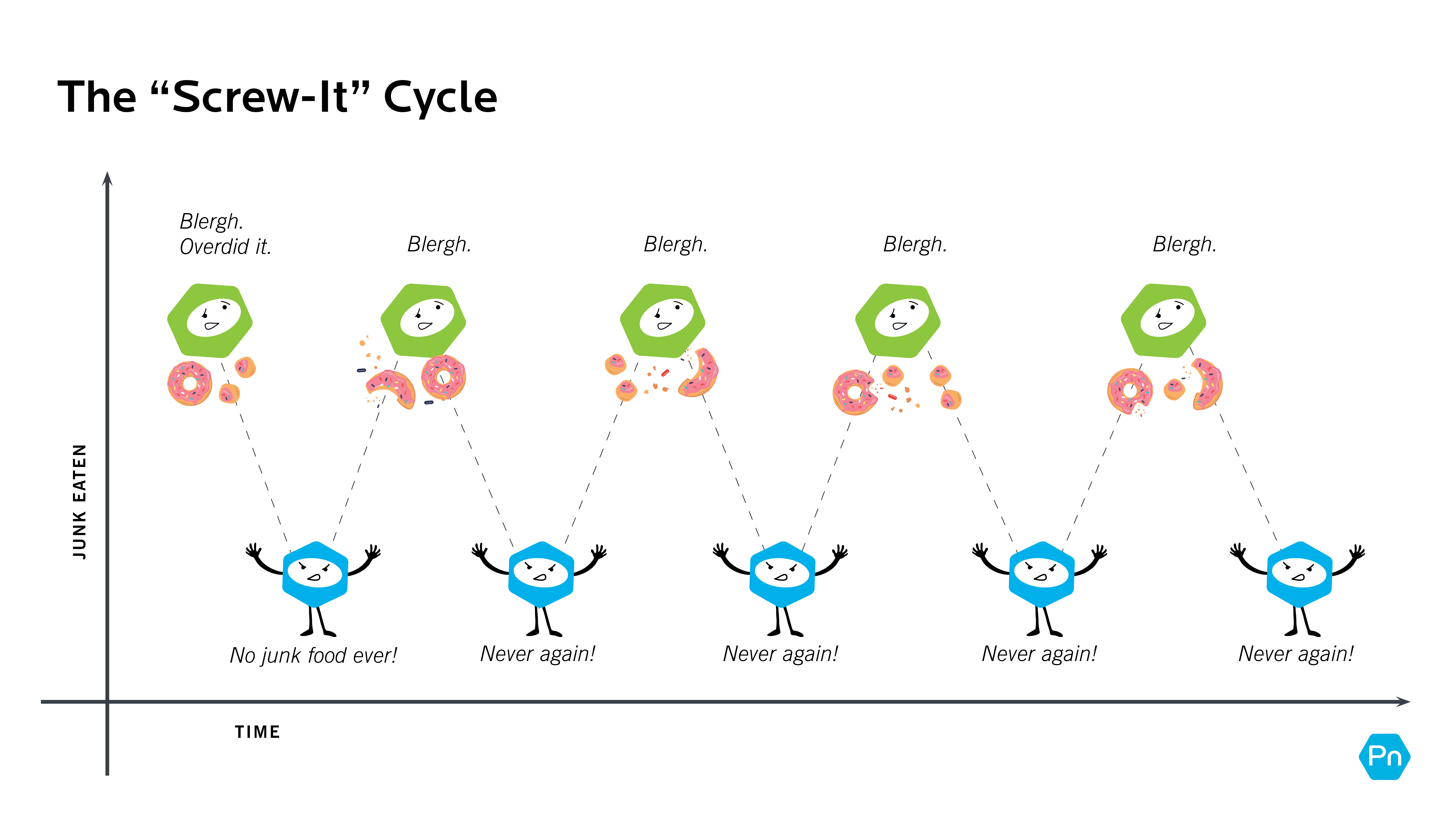
In actuality, aiming for 100% self-restraint typically goes extra just like the “Screw It” Cycle under.
You say you’ll by no means once more eat donuts with pink frosting. Then you definately eat one. That results in, “Screw it! Give me all of the donuts!” Sooner or later (maybe January 1, or any given Monday) you strive once more with a brand new declaration of abstinence, and the cycle continues.
Think about how issues may change in the event you ate half a pink-frosted donut regularly, and didn’t really feel responsible about it. In different phrases, you welcomed slightly bliss into your life, daily.
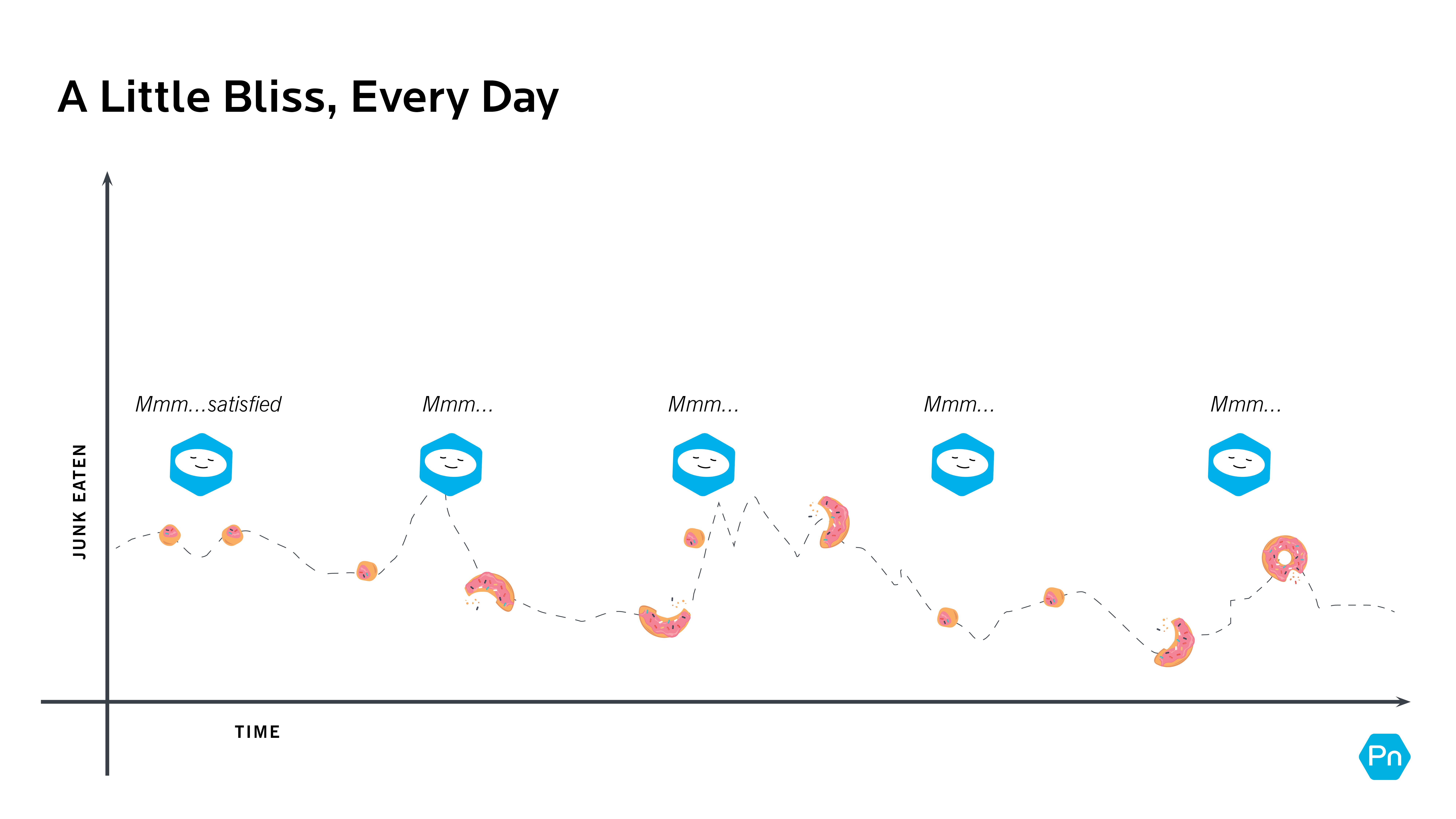
As you possibly can see, while you eat your favourite meals usually and deliberately, you’ll seemingly eat much less of them than while you eat loads, then none, then loads, then none. (Plus, you’ll really feel loads much less spun out and defeated.)
For most individuals, together with a little bit of what you’re keen on usually truly helps to curb cravings and really feel extra happy.
Nonetheless, your self greatest.
If a sure meals makes you’re feeling completely out-of-control—you could have hassle managing your portion, or really feel mentally and/or emotionally “checked out” whereas consuming it—typically it’s simpler to abstain from it utterly, a minimum of for a time period.
(In case your consuming behaviors typically really feel compulsive and hard-to-control, try: Food addiction: Why it happens, and 3 ways to get help)
Motive #2: Junk meals gained’t cease you from progressing towards your well being objectives.
You don’t must eat completely 100% of the time to make progress.
(The truth is, aiming for perfection normally backfires due to Motive #1.)
From teaching over 100,000 shoppers, we’ve discovered that whereas there’s no “magic” proportion, usually all it is advisable enhance well being, athletic efficiency, and physique composition is to:
Eat a eating regimen composed of about 70 to 80 % nutrient-dense minimally-processed meals.
And that’s your finish aim.
(If that guideline sounds unrealistic, you possibly can enhance your well being by simply barely tipping the ratio towards extra minimally-processed meals—wherever you’re ranging from.)
Even in the event you’re making an attempt to turn into your healthiest and fittest ever, you by no means should purpose for 100% “virtuous” (a.ok.a. no treats ever).
That’s as a result of as meals restriction goes up, so can different issues resembling meals obsession, nervousness, and disordered consuming.
For a visible, try the graphic under.
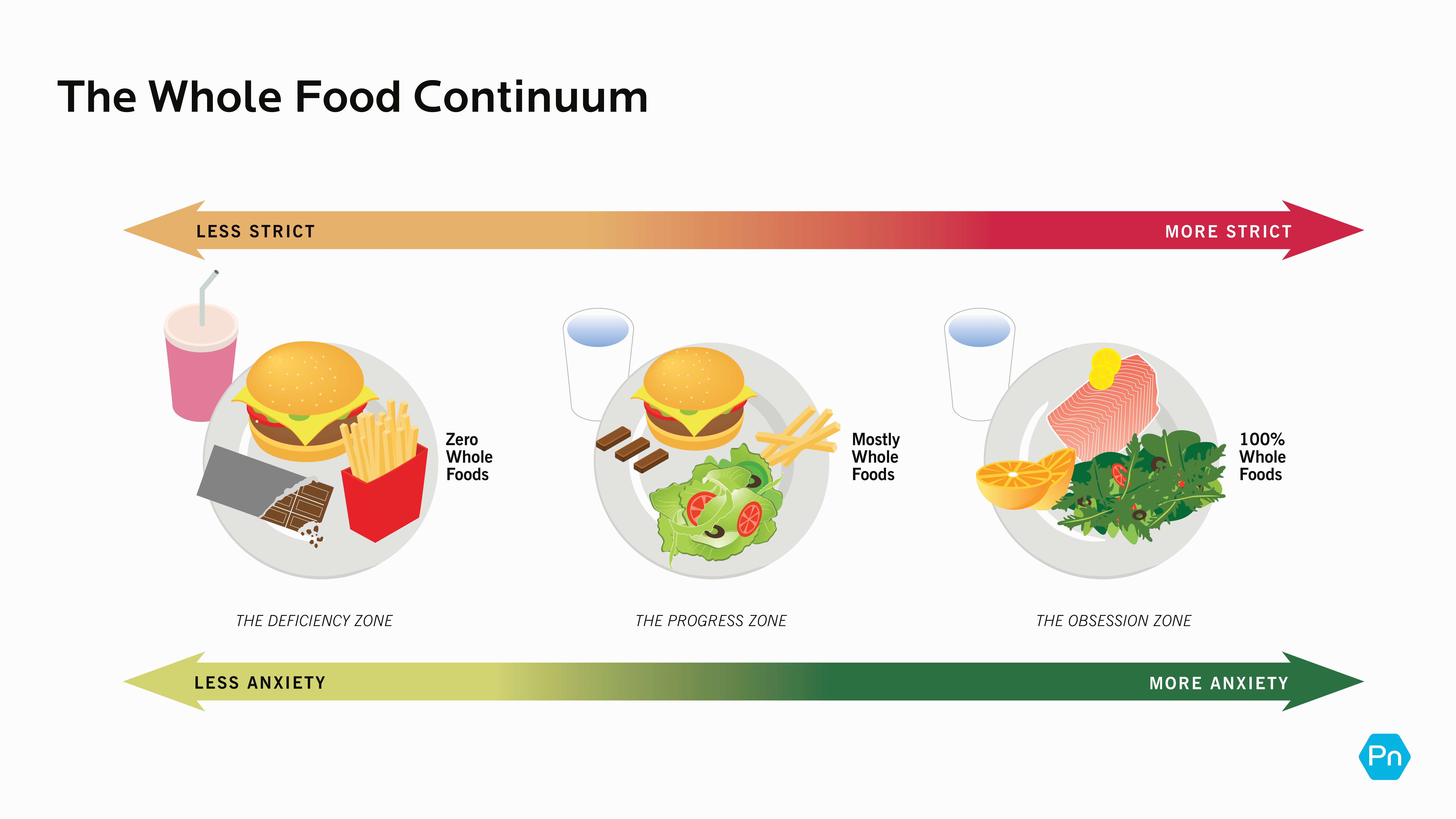
Because of the steep prices, we solely advocate extremely restrictive diets for shoppers who’re ready for the tradeoffs.
These folks—the professional athletes, physique opponents, and celebrities amongst us—typically earn their dwelling primarily based on how their our bodies look and carry out. (And likewise are typically surrounded by individuals who assist them make all of it occur.)
Even so, our professional shoppers solely often attain the 90 to 99 % mark—and infrequently solely in the course of the time main as much as a contest, occasion, or function.
Then they shift to a extra sustainable strategy.
(Need proof that perfection isn’t required to progress? Learn: Nearly 1 million data points show what it really takes to lose fat)
Motive #3: Cheap quantities of junk meals can increase well being.
It’s true that consuming excessive quantities of low-quality meals seemingly worsens your bodily well being.
Nonetheless:
Your bodily well being solely makes up part of your general well being.
Because the graphic under exhibits, your relationships, sense of which means and goal, psychological readability, emotional wellbeing, and surrounding surroundings spherical it out.
At PN, we refer to those intersecting elements of wellbeing as deep health. Whereas sure meals in sure quantities seemingly hurt some elements of deep well being, they could truly enhance others.
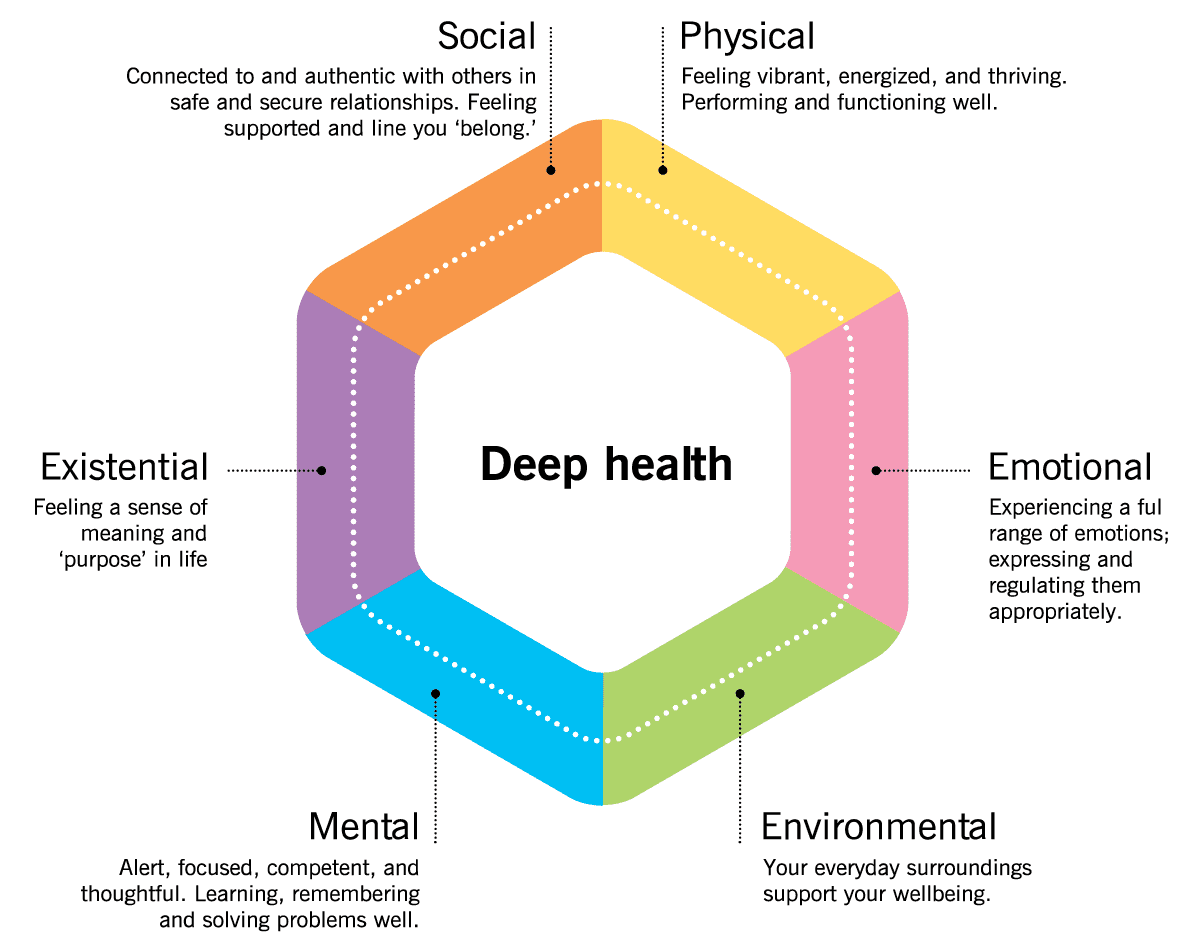
(If that is complicated, we promise it’ll make extra sense in about 30 seconds.)
To know how this works:
Consider the deep well being dimensions as a battery pack.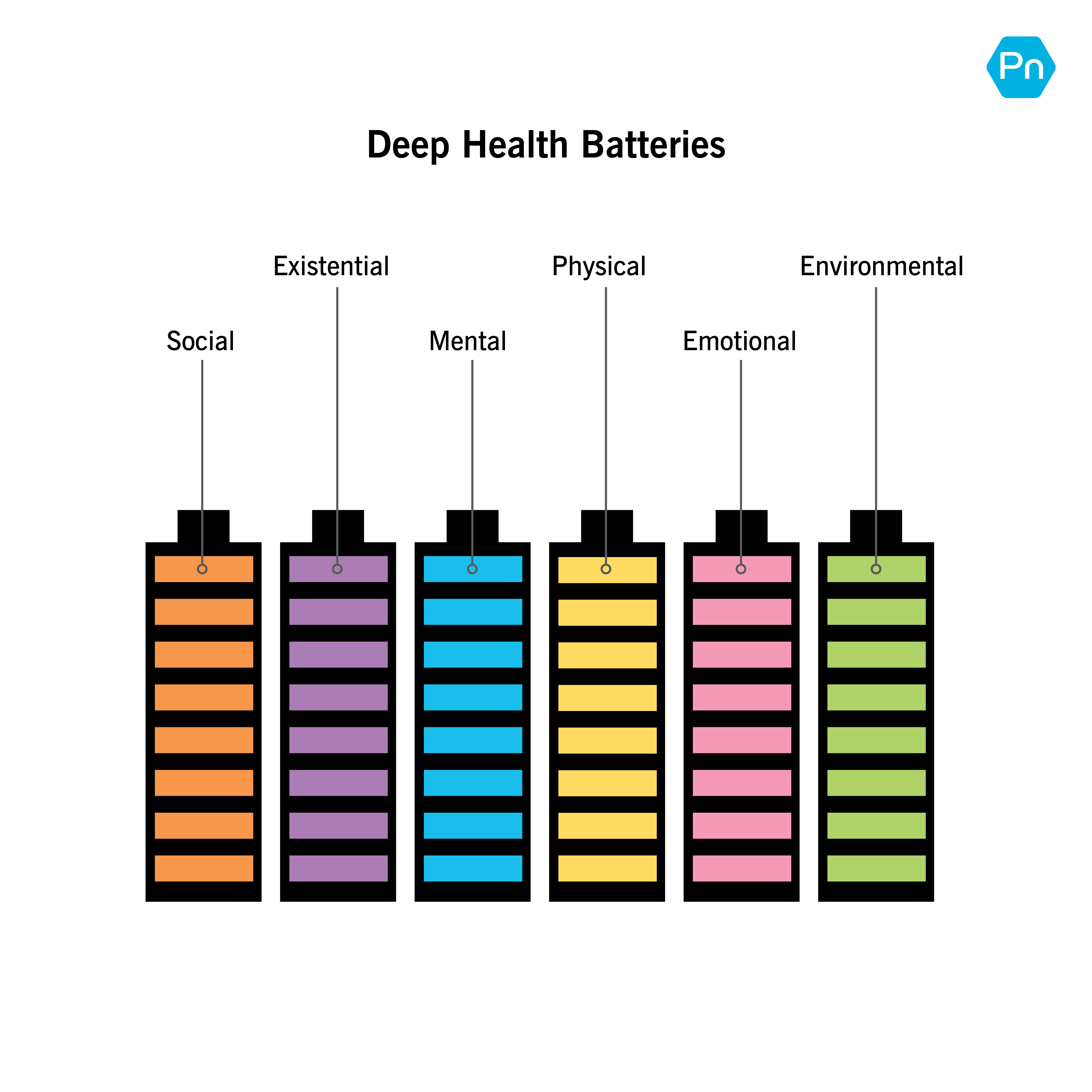
▶ Some decisions and experiences cost some batteries; others drain them.
▶ In case you cost greater than you drain, you’re feeling nice.
▶ In case you drain greater than you cost, issues occur. Perhaps you develop a well being challenge, battle to get off the bed, or simply really feel type of “blah.”
An excessive amount of junk meals over time can drain your bodily well being battery.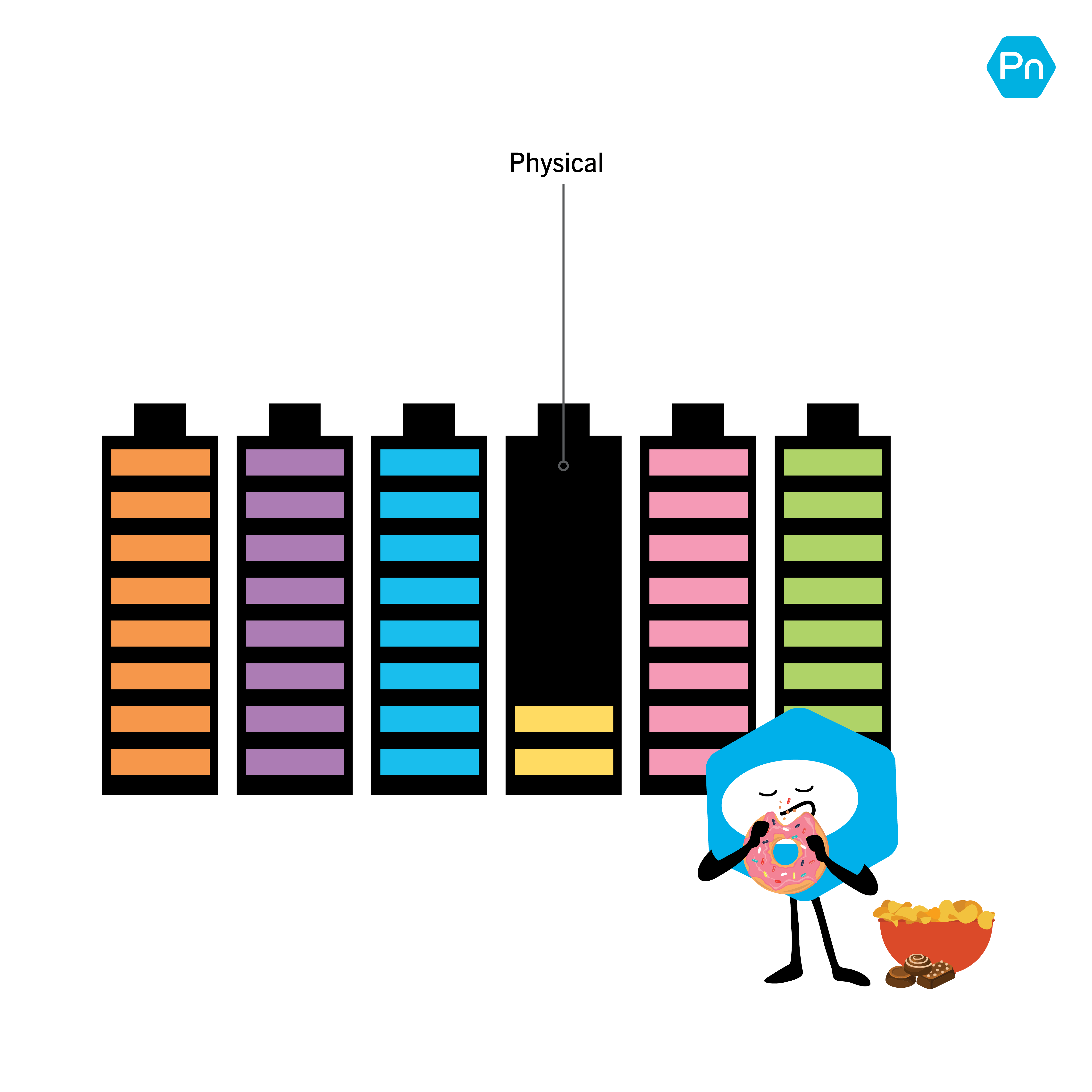
Relying on how a lot you eat, low high quality meals may additionally deliver on mind fog and sluggishness, draining your psychological battery. And this typically results in emotions of guilt, disgrace, and frustration, draining your emotional battery too.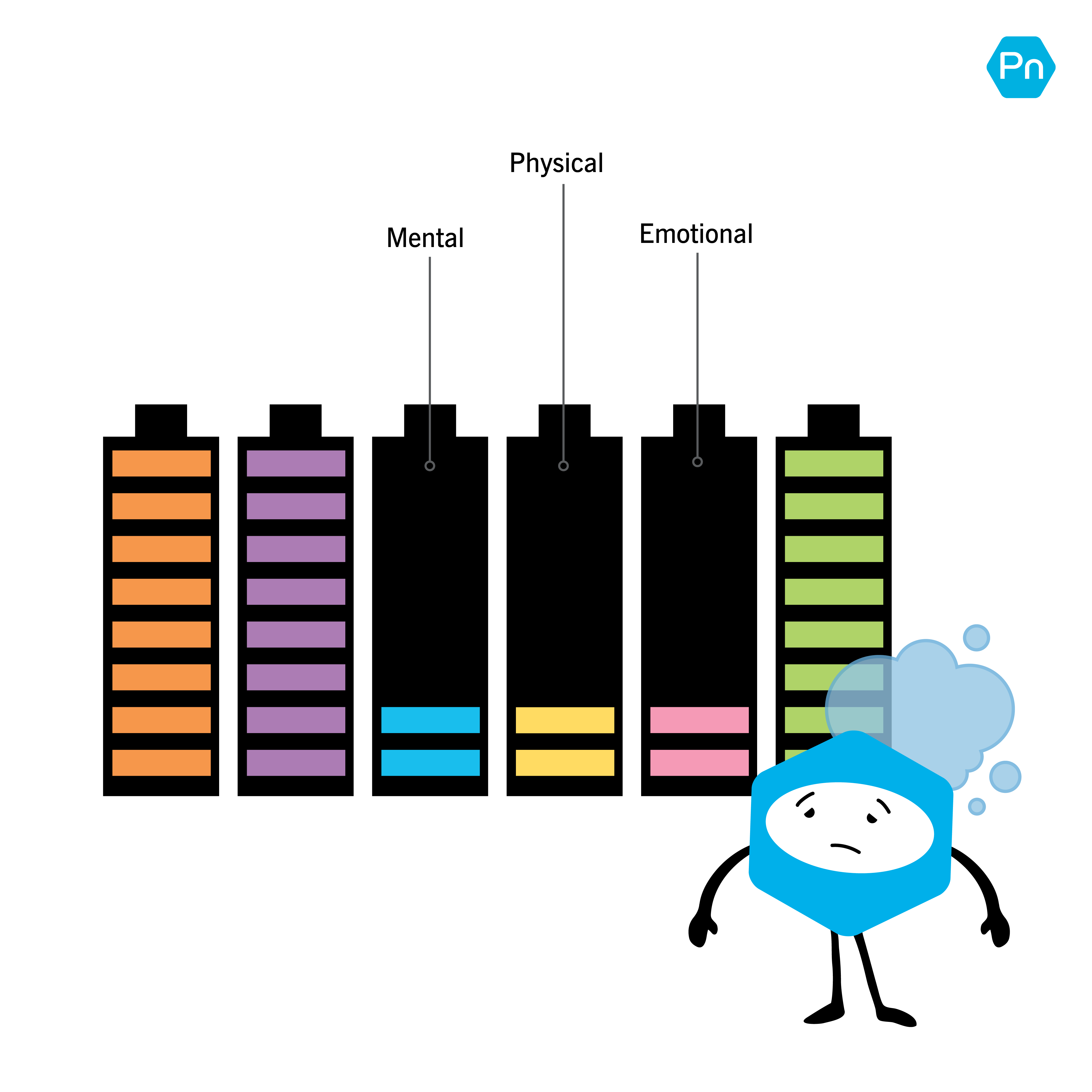 HOWEVER… in the event you transfer usually, sleep effectively, handle your stress, and heart the vast majority of your eating regimen round lean proteins, veggies, fruits and different minimally-processed carbs, and wholesome fat, you possibly can preserve these bodily, psychological, and emotional well being batteries fairly effectively powered up.
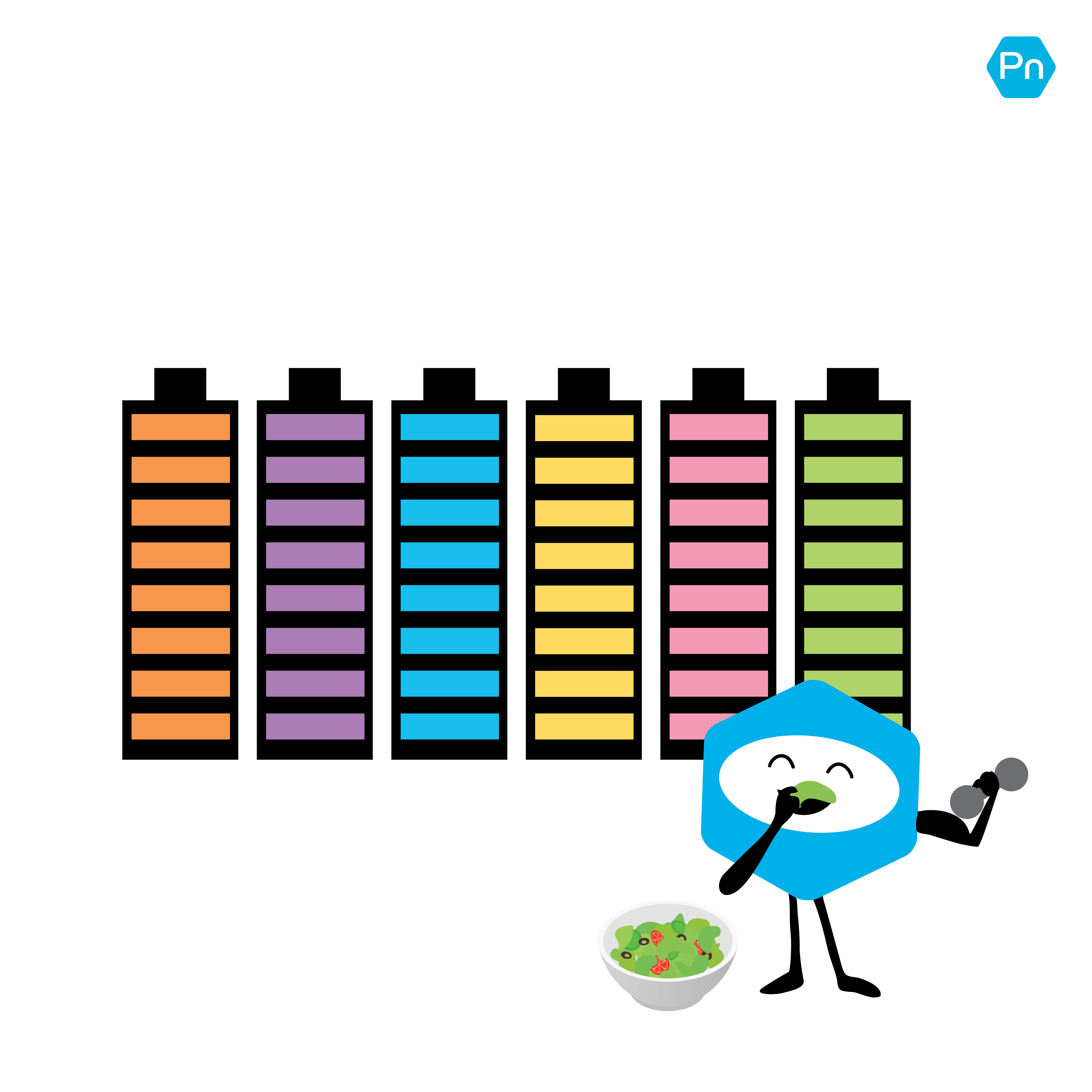 You’ll be able to assist decrease the damaging results of junk meals by sustaining general good well being habits.
However right here’s one thing most individuals miss: Junk meals can truly cost different batteries—assuming you eat it deliberately.
By deliberately, we imply:
You select to eat the meals on goal (not simply because it’s there), with pleasure and contentment (moderately than guilt), in an quantity that aligns along with your general well being objectives, and after weighing and accepting the tradeoffs.
Do all of that and also you may see an improve in…
✅ Social well being in the event you eat the meals with a buddy or liked one
✅ Existential well being if that yumminess alights your soul with pleasure—and doesn’t make you’re feeling responsible (cookie dough for the soul, anybody?)
✅ Emotional well being if small, intentional indulging helps you’re feeling content material, relaxed, and happy (moderately than disadvantaged and, finally, resentful)
The consequence: that ice cream tour may very well increase general well being (even when it doesn’t straight profit bodily well being).
Need to guarantee your favourite meals energy your well being batteries extra than they drain them? Use this 5-step course of.
Step 1: Resolve whether or not the advantages are definitely worth the tradeoffs.
Take into consideration your favourite treats—and the way they have an effect on your deep well being.
Then ask your self:
Is that this meals value it?
It’d not be if, along with draining your bodily well being, the meals additionally drains your:
- Emotional well being (since you really feel ashamed and responsible)
- Social well being (as a result of that disgrace causes you to retreat to a lonely car parking zone or hidden nook of your home to eat)
Alternatively, the meals may completely be value it if it provides which means to your life, is a part of a social ritual, and/or helps you address stress (together with different adaptive coping abilities and techniques).
Solely you can determine.
After enthusiastic about the professionals and cons, make an intentional selection to both embody the meals (or not).
Step 2: Discover and identify any negativity.
Let’s say you’ve determined to incorporate these crunchy, cheezy snacks in your dietary repertoire.
Then you definately hear it: A voice in your head bellowing, ‘NOOOOO! DON’T TOUCH THE ORANGE DUST! BAAAD!’
And but, two minutes after you’ve scolded your self like a disobedient pet, you’re as much as your forearms in a advantageous layer of sticky orange powder.
Regardless of its insistence, that judging, bellowing voice isn’t so efficient.
As a substitute of scaring us into doing the precise factor, that voice normally simply provokes us to do the other:
Eat extra.
Why?
Properly, for one, nobody likes being informed “No.”
A giant, scary, finger-wagging “NO” causes your inside teenager to insurgent and eat the entire bag as an alternative.
Or, it causes you to really feel so ashamed that you just shove a bunch of meals in your mouth for consolation—typically in secret away from the judgment of others.
To work with this voice and the sentiments it provokes, strive a easy approach known as “discover and identify.”
The right way to do it
Noticing means taking note of your ideas, emotions, and actions.
Think about:
- What are you doing… proper now?
- What are you pondering… proper now?
- What’s round you… proper now?
Naming means you describe the scenario to your self.
Once you discover and identify damaging ideas about your meals decisions, it’d sound like this:
“I hear the ‘that is unhealthy’ voice in my head proper now. Noticing that. I’m additionally feeling type of ashamed and in a rush to eat the entire thing and get it over with.”
Consciousness provides you time to reply.
From there, you possibly can consciously determine what to do subsequent.
Perhaps you crunch away anyway.
Or perhaps you simply sit with the voice, and see if something adjustments.
For instance, in the event you sit with it lengthy sufficient, that voice that originally appeared so offended may shift right into a voice that’s extra scared and anxious:
“I’m simply afraid that in the event you eat an excessive amount of, you’ll get some horrible illness.”
In case you sit with it additional, that voice could reveal a deep sense of self-love and care:
“All I really need is so that you can be glad and wholesome. I’m simply searching for you.”
And that’s a a lot simpler feeling to work with.
Step 3: Arrange guardrails.
Impulsive consuming typically goes one thing like this:
“Ooooh, Sally introduced home made brownies!”
[Cue zombie-like binge]
Likelihood is, you stroll away from that type of expertise with a yucky feeling—and crumbs in your face.
Guardrails will help you navigate tempting alternatives with some management, so you possibly can rein in these impulsive experiences.
To set them up, use a framework we train our shoppers. It’s known as the 3S framework—S stands for techniques, constructions, and schedules.
(We all know that sounds about as thrilling as a visit to a paper clip manufacturing unit, however belief us, it is a golden framework that may make any aim extra achievable. Follow us.)
Design a junk meals system
Techniques are practices and rituals that assist align your actions along with your intentions and objectives.
To arrange a system to make intentional consuming simpler, you may ask your self:
What’s going to make it simpler to eat deliberately—and tougher to eat impulsively?
Perhaps you…
- Do a weekly grocery run and/or weekly meal prep to have wholesome meals accessible and ready-to-eat.
- Purchase household measurement baggage of snacks, then re-portion them into particular person serving containers. Or, solely purchase pre-portioned snack sizes of those meals (e.g. 100-calorie snack packs).
- Eat your favourite low-quality meals after your largest meal, so that you’re much less prone to overeat these meals from sheer starvation.
Add some construction
Constructions are the environments that include us, and form our habits. They embody our properties, workplaces, and different locations we go.
To create an surroundings that helps conscious consuming, ask your self:
What must be round me to assist me eat with intention?
Perhaps you determine to:
- Inventory your kitchen with wholesome meals that you just like, is simple to eat, and is seen. For instance, recent fruit in a basket on the counter.
- Flip your property right into a “protected zone” (with restricted tempting meals) so that you don’t succumb to impulsive consuming while you’re having a nasty day. (And preserve these tempting meals out of sight.)
- Take the lengthy path to the toilet at work, each to get in additional steps in addition to to keep away from seeing a coworker’s sweet bowl.
Schedule it
Schedules create a time-specific “container” for sure behaviors, so that they don’t bleed into your life 24/7.
To assist make junk meals extra intentional, ask your self:
When can I schedule indulgent snacking in order that I get pleasure from it but additionally really feel much less responsible and anxious?
Perhaps you determine to…
- Create a versatile weekly meal plan that features a base of wholesome meals, plus intentional pleasures—a enjoyable measurement sweet bar after lunch or a small bowl of ice cream after dinner.
- Schedule your snack for a similar time daily, resembling a 3 pm luxurious work break, with a couple of squares of chocolate, a cup of decaf, and nil distractions.
- Arrange a weekly or bi-weekly night with your folks, full with chips and booze—netting a social and existential well being increase.
The small adjustments above will help you eat junk meals with out feeling disadvantaged or restricted. You’ll be capable to eat it since you need to, and never as a result of it’s simply there.
Step 4: Take pleasure in it.
This may seem to be a no brainer, however we’ll say it anyway:
In case you’re going to decide on to have one thing scrumptious, you may as effectively…
Savor the expertise.
Along with growing enjoyment, savoring can even assist you to really feel extra happy with a smaller quantity. To do it:
▶ Take note of the expertise of consuming. Eat treats in a setting that lets you get pleasure from each chunk. So…
- Step away out of your laptop, TV, or telephone.
- Take a couple of deep, sluggish breaths earlier than the primary chunk, to calm distracting ideas and nervousness.
- Use your senses—sight, odor, style, contact—to completely get pleasure from it.
▶ Eat slowly. That makes the deliciousness last more, and in addition lets you really feel calmer. (See why this apply is the bomb: The 30-day slow eating challenge that can transform your body)
▶ Swap guilt for pleasure. Use the notice and name technique to uproot any responsible ideas. After bringing consciousness to any damaging emotions, shift your focus to your senses once more, and the way goooood this tastes.
“My portion is gone—and I’m bummed!”
Due to a mixture of out-of-this-world taste and brain-altering chemical substances, sure meals are tremendous onerous to cease consuming.
Like a 3-½ minute therapeutic massage, they depart your mind begging for extra.
We’ve already informed you about a couple of issues that may assist.
However typically, these practices aren’t sufficient.
Even after mindfully consuming an intentional portion, you may nonetheless really feel like a toddler tantruming: “Extra! Extra!! MORE!!”
Or perhaps different painful emotions come up: unhappiness, vacancy, nervousness, even anger.
The robust information: Typically you possibly can’t keep away from these emotions, and also you simply want to sit down along with your discomfort.
As you surf these uncomfortable sensations, strive utilizing self-talk that’s compassionate, rational, and type:
“Wow, my mind REALLY desires extra proper now. This meals is scrumptious, but when I eat extra it WON’T preserve boosting my existential well being—and it’d drain my bodily, psychological, and emotional well being. This feels onerous and uncomfortable, however I’ve reached the purpose the place this meals can now not nourish me and I’m selecting to cease.”
Along with chatting with your self kindly, you may also take a form motion: Flip in your favourite music, make some tea and get cozy on the sofa with a ebook, or no matter helps you’re feeling nourished and cared for.
(Why are some meals SO onerous to cease consuming? Learn: Manufactured deliciousness and overeating)
Step 5: Once you mess up, transfer on.
The reality is:
Now and again, you’re going to eat impulsively.
We ALL do that typically. (Erm… together with everybody who wrote and edited this piece.)
Once you catch your self mindlessly inserting issues in your mouth, name it out, and perform a little detective work to discover what’s happening.
Ask your self…
- What led to this second?
- Has this ever occurred earlier than? When?
- What may I do otherwise sooner or later?
(Psst: Our Break the Chain worksheet will help you with the above sleuthing, particularly if a conduct is a persistent drawback.)
When you’ve gained some insights, wipe the slate clear.
What you simply ate a couple of moments in the past now not issues. It’s over, and no quantity of negativity goes to undo it. Be taught from it, and transfer ahead.
Take a optimistic step in any dimension of well being: Go for a stroll (bodily well being), snuggle your pet (emotional and social well being), loosen up in a good looking, awe-inducing setting (existential well being), or write about what occurred in your journal (psychological and emotional well being).
All of us deserve pleasure.
Making an attempt to be too excellent typically results in diminishing returns.
So, as an alternative of denying—or demonizing—junk meals, strategy it such as you would that wild buddy you had in faculty.
You may not need to reside the occasion life 24/7, however darn, it positive is enjoyable in small, common doses.
In case you’re a coach, otherwise you need to be…
Studying methods to coach shoppers, sufferers, buddies, or relations by way of wholesome consuming and life-style adjustments—in a means that’s personalised for his or her distinctive physique, preferences, and circumstances—is each an artwork and a science.
In case you’d wish to be taught extra about each, think about the Precision Nutrition Level 1 Certification.
